


Why Carbon Capture Technology Must Continue to Improve
Cutting greenhouse gas emissions has become a top goal as the globe faces the effects of climate change. Although electric vehicles, sustainable habits, and renewable energy sources all greatly contribute to a cleaner environment, many experts concur that these actions might not be sufficient to counteract the enormous volumes of carbon dioxide (CO₂) that are already present in our atmosphere. A viable remedy for this problem is carbon capture technology, which extracts and eliminates CO₂ emissions straight from sources such as power plants, factories, and even the air itself. However, carbon capture needs to keep developing and getting better if it is to play a significant role in mitigating climate change.
This article will discuss the importance of developing carbon capture technology, the present shortcomings of current approaches, and the possible benefits for investing.

Comprehending Carbon Capture: What Is It While It Operates?
The process known as carbon capture, utilisation, and storage (CCUS) absorbs CO₂ emissions from energy-related and industrial processes and keeps them out of the environment. The carbon capture technology is divided into three phases:
Capture: CO₂ is stopped at its source, usually by using specialised filters or chemical absorption techniques.
Transport: After being captured, the CO2 is subsequently moved to a location for storage or use, usually via pipes.
Storage/Utilization: The CO₂ can be utilised in other processes, such improving oil recovery or producing products, or it can be permanently stored underground in geological formations.
The production of energy, cement, steel, and other materials can all benefit from the use of carbon capture technologies. A possible method of lowering past emissions is to use carbon capture programs like direct air capture (DAC), which even extract CO₂ straight from the surrounding air.
Why Is It Important to Advance Carbon Capture Technology?
Despite being a promising technology, carbon capture still has a lot of issues with cost, scalability, and efficiency. The following justifies the need for further advancements in carbon capture technology:

1. Reducing Emissions Is Not Enough to Meet Climate Goals
It is getting more and more challenging to meet the Paris Agreement’s target of keeping global warming to 1.5°C over pre-industrial levels. Given the significant amounts of CO₂ currently in the atmosphere, current climate models indicate that only lowering new emissions may not be sufficient to reach this goal. Emissions from large industries, for example, that are difficult to cut or remove, can be significantly offset by carbon capture.
Enhancing carbon capture technology will increase its efficiency and accessibility, making it a key component of global climate policies. By making up for the most difficult emissions that are left over after other reductions are completed, this technology can help support a road to net-zero emissions.
- Emissions from “Hard-to-Abate” Sectors Can Be Addressed by Carbon Capture
Although electrification and renewable energy hold promise, not all businesses can completely eradicate their carbon emissions using these strategies. There are few possibilities for extensive decarbonisation in some of the most carbon-intensive industries, such as steel, cement, and chemical manufacture. Because clinker is a crucial element in cement, the chemical process used to make it contributes around 8% of global CO2 emissions.
These businesses may be able to function with reduced emissions thanks to improved carbon capture technology, which would address sources of pollution that are impossible to prevent otherwise. Carbon capture has the potential to be a practical solution for these challenging industries by increasing capture efficiency and cutting costs.
- The Key to Long-Term Climate Stability Is Lowering Atmospheric CO₂
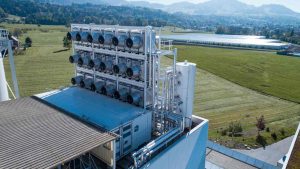
We must handle the CO₂ that has already collected in the atmosphere in addition to preventing fresh releases. Direct air capture (DAC) is a promising method that has the potential to reverse emissions by removing CO₂ directly from the air using carbon capture equipment.
Enhancing DAC technology has the potential to promote long-term climate stability by removing millions of tonnes of CO₂ from the atmosphere each year. Even though DAC is now costly and energy-intensive, research and development is progressing, which may eventually result in more cost-effective and efficient systems.
- Increased Adoption and Lower Costs Due to Improved Carbon Capture Efficiency
The expense of carbon capture is one of the main obstacles to its widespread use. It is frequently too costly to capture CO2 emissions, especially for smaller businesses or nations with weaker financial standing. Technological developments can lower the cost of carbon capture, lowering operating expenses and paving the way for broader industry use.
Materials science advancements like the creation of novel membranes and capture solvents have the potential to lower prices and boost capture efficiency. We can make it possible for more businesses and governments to incorporate carbon capture into their climate plans by lowering the overall cost of the technology.

- Boosting Innovation in Carbon Capture Promotes Economic Growth and Job Creation
Putting money into carbon capture technology can boost employment and the economy. According to the International Energy Agency (IEA), CCUS technology expansion could result in the creation of thousands of new employment worldwide. These positions would be in a variety of fields, such as project management, engineering, manufacturing, and construction.
Because businesses and nations that invest in green technologies now are more likely to remain competitive in a low-carbon future, improving carbon capture technology can also increase economic resilience. Furthermore, carbon capture technology and expertise could become important export prospects for leading nations as the need for sustainable solutions increases globally.
Present-Day Carbon Capture Limitations and Difficulties
Carbon capture technology still confronts a number of obstacles in spite of its potential. For carbon capture to be a fundamental component of climate solutions, these restrictions must be addressed.
Expensive: The price of CO2 capture is still a major obstacle, especially for direct air capture. Point-source collection can cost anything from $40 to $120 per tonne of CO₂, while DAC can cost significantly more.
Energy Intensity: Separating and transporting CO₂ frequently requires a significant amount of power, making carbon capture an energy-intensive process. The environmental advantages of carbon capture would be compromised if it were powered by fossil fuels.
Infrastructure Needs: A lot of infrastructure, like as pipelines and storage facilities, is needed for the transportation and storage of CO2. The construction of this infrastructure is expensive, requires clearance from the government, and occasionally faces popular opposition.
Safety of Long-Term Storage: Long-term CO2 storage raises questions, especially in light of the possibility of leakage from geological storage locations. To avoid unexpected environmental effects, CO2 storage security must be guaranteed.
Potential Advancements in the Technology of Carbon Capture
These issues are being addressed by ongoing research and development with breakthroughs that may increase the viability and scalability of carbon capture:
New Materials: To absorb CO₂ more effectively and economically, scientists are creating sophisticated solvents, membranes, and sorbents.
Energy Efficiency: By enhancing process designs and incorporating renewable energy sources, efforts are being made to lower the energy needed for carbon capture.
Modular Capture Systems: In order to provide flexibility and scalability and facilitate the adoption of the technology by businesses of all sizes, small, modular carbon capture systems are being created.
Carbon Utilisation: Improvements in carbon utilisation allow CO₂ to be recycled into chemicals, construction materials, and fuels, which reduces capture costs and adds value.
Conclusion
In order to reach global climate objectives, carbon capture technology must continue to advance as climate change worsens. We can make carbon capture an effective weapon in the fight against climate change, tackling emissions from industries that are difficult to mitigate, lowering atmospheric CO₂, and generating economic opportunities by improving its efficiency, scalability, and affordability. However, reaping these benefits needs persistent investment, research, and dedication from both the public and commercial sectors.
Carbon capture has a bright future, but only if its advancement is given top priority as a crucial part of an all-encompassing climate plan. Future generations can benefit from a more stable and sustainable climate if carbon capture technology is developed further.