


Imagine entering a store, getting what you need, and leaving without having to wait in queue to pay. Although it sounds futuristic, smart retailers’ checkout-free shopping experiences are a reality. Checkout-free stores, which were pioneered by businesses such as Amazon Go, use cutting-edge technologies to remove the inconvenience of typical checkout lines, giving customers a smooth and effective experience.
How do these stores operate, then? This blog article will examine the technology underlying checkout-free retail, its advantages, and the possible drawbacks of putting such cutting-edge systems into place.
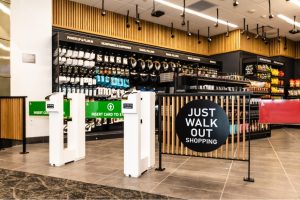
Smart Stores: What Are They?
Smart stores eliminate the need for traditional cash registers and checkout queues by utilising cutting-edge technologies like artificial intelligence (AI), computer vision, and sensors. These shops let customers take what they want and go, with their transactions being logged and invoiced immediately.
The idea is straightforward: let technology take care of the rest and eliminate the checkout bottleneck. In addition to improving the consumer experience, this strategy maximises businesses’ operational effectiveness.
How Do Retail Experiences Without Checkouts Operate?
Modern technology and procedures that cooperate to recognise, monitor, and bill clients for their purchases provide the foundation of checkout-free businesses. Let’s dissect it in detail:
1. Identification-Based Entry
A distinct digital ID is used to identify each consumer as they enter a smart store. Usually, this is connected to an account or mobile app, like the Amazon Go app. To guarantee their identification is linked to the system, customers scan their app at a door or turnstile to get entrance.
2. Product Monitoring using Cameras and Sensors
The actions of the customer and the objects they pick up are continuously monitored by a network of sensors and cameras inside the store. Among the technologies used are:
Computer Vision: To determine when a customer picks up or puts down an item, cameras examine video streams.
Shelf Sensors: When a product is taken out or given back, weight-sensitive shelves recognise it.
RFID tags: Some retailers track merchandise using RFID (Radio Frequency Identification).
Together, these technologies are able to identify the things that the consumer takes without the need for barcode scanning or cart scanners.
3. Updates to a Virtual Cart in Real Time
The system generates a virtual cart that changes in real time while customers shop. For example, the system adds a loaf of bread to your virtual cart when you pick it up and put it in your bag. The bread is taken out of the cart if you decide to return it to the shelf.
4. Without registering, check out
Customers just leave the store after doing their purchasing. The products in their virtual cart are immediately charged to the associated payment method by the system once it recognises that they have left. The customer receives a receipt through the app.
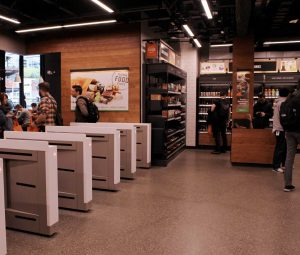
The Technology Underpinning Stores Without Checkout
Checkout-free stores use an integrated ecosystem of cutting-edge technology to accomplish this degree of automation:
Artificial Intelligence (AI): To recognise products and comprehend consumer behaviour, AI systems examine data from cameras and sensors.
Machine Learning (ML): The system gains proficiency in managing edge cases, such as several consumers picking up items at once, and in accurately identifying products over time.
IoT (Internet of Things): IoT gadgets, including smart cameras and shelf sensors, allow for real-time inventory and consumer interaction tracking.
Cloud computing: To guarantee smooth operation and scalability, storage data is processed and examined in the cloud.
Advantages of Retail Checkout-Free
1. Improved Experience for Customers
Checkout-free businesses provide a quicker and more convenient shopping experience by doing away with the hassle of standing in queue. Customers who are time-conscious and busy will find this very enticing.
2. Efficiency in Operations
Retailers can free up floor space and assign employees to other duties, like helping customers or stocking stores, by eliminating the need for checkout lanes and cashiers.
3. A decrease in human error
Automation reduces transaction errors, guaranteeing precise inventory control and billing.
4. Insights Based on Data
Smart retailers gather useful information about consumer behaviour, including product preferences and buying habits. Retailers can use this data to optimise store layouts and enhance their offers.
Obstacles and Things to Think About
Despite the remarkable technology underlying checkout-free retail, there are obstacles to its broad adoption:
1. Expensive implementation fees
Investing heavily in technology, from cameras and sensors to cloud computing infrastructure, is necessary to set up a smart store. Smaller retailers may find this to be a hurdle.
2. Privacy Issues
Concerns regarding consumer privacy are raised by the usage of cameras and tracking devices. Retailers are required to guarantee openness and adherence to data security laws.
3. Situations on the Edge
It can be difficult for AI systems to handle special circumstances, including when customers share things or shop in groups. Improving continuously is necessary to deal with such situations.
4. Restricted Product Categories
Implementing checkout-free systems successfully may be more difficult for some store types, such as those that sell custom goods or loose items.
Checkout-Free Retail’s Future
Despite these obstacles, innovation in checkout-free retail is being driven by consumer demand for seamless shopping experiences. We may anticipate that more businesses will implement smart store systems as technology becomes more widely available and reasonably priced.
Future developments in AI, 5G connection, and IoT are probably going to make checkout-free shopping even more common and effective. Imagine how our interactions with physical environments might change if grocery stores, clothes stores, and even restaurants adopted checkout-free technologies.
In conclusion
The next step in the evolution of shopping is checkout-free retail experiences, which combine convenience and state-of-the-art technology. Smart stores provide unmatched efficiency and a window into the future of shopping by doing away with checkout queues. The advantages for consumers and companies alike make this invention worthwhile, even though obstacles like cost and privacy issues still exist.
The way we buy will continue to change as more businesses adopt this approach, solidifying checkout-free stores as a mainstay of the contemporary retail environment. It’s a fascinating time to see how shopping has changed, whether you’re a customer or a business owner.