


Innovation in consumer technology is fuelled by rethinking what is feasible. Massive changes have occurred in the past ten years, from wearable technology improving fitness and health tracking to cellphones transforming communication. One of the most recent developments in technology is the emergence of foldable screens, a device that has the potential to revolutionise consumer electronics in ways that were previously only seen in science fiction.
Foldable screens are the result of advances in material science, engineering, and user experience design rather than just a passing fad. We’ll look at the history of foldable screens, their contemporary uses, their difficulties, and why they’re the next big thing in consumer electronics in this blog.
Foldable Screens’ Ascent
1. The idea of foldable screens first emerged in the early 2010s, when tech aficionados were awed by Samsung and LG’s prototype displays. An important advancement above conventional LCDs, these early displays demonstrated flexible OLED (organic light-emitting diode) technology. OLEDs can be produced on flexible substrates, such as plastic, unlike rigid displays, allowing for foldability without sacrificing image quality.
Foldable cellphones started to appear on the consumer market by 2019. A turning point was reached by Samsung’s Galaxy Fold, which was followed by rivals like Motorola’s Razr series comeback and Huawei’s Mate X. Every version showcased the possibilities of foldable gadgets, offering consumers a special fusion of portability and efficiency.
In addition to smartphones, foldable technology is now used in laptops, tablets, wearables, and even televisions. The fact that businesses like Lenovo, ASUS, and LG are investigating rollable screens and foldable laptops shows that innovation is not just limited to mobile devices.
One of the main advantages of foldable screens is their increased portability without sacrificing size.
The best of both worlds is provided by foldable screens, which are small gadgets that can be expanded into larger displays. A foldable smartphone is perfect for reading, multitasking, and watching movies because it can be converted from a pocket-sized gadget to a tablet. Foldable screens enable incredibly thin laptop designs that offer both conventional and tablet-style modes of operation.
2. Enhanced Ability to Multitask
Simple split-screen multitasking is made possible by foldable devices. Imagine using the same device to watch a tutorial while coding or to work on a Word project while consulting a spreadsheet. Productivity is increased by the greater screen real estate without the need for extra accessories.
3. Rethinking User Experiences
Designers are pushed to reconsider user interfaces and experiences by foldable screens. For example, in order to provide more flexible and immersive experiences, app developers are investigating dynamic user interfaces (UIs) that smoothly transition between folded and unfolded states.
4. Innovations in Durability
Although durability is still an issue, strong foldable screens are becoming possible because to developments in materials like ultra-thin glass (UTG). These advancements guarantee a smoother folding mechanism over time in addition to protecting the display.
Uses Not Just for Smartphones
The story of foldable screens is dominated by smartphones, but there are other noticeable improvements aswell:
Computers
For corporate users, foldable laptops like Lenovo’s ThinkPad X1 Fold provide an unmatched level of versatility. These gadgets are multipurpose tools for professionals because they may be used as a tablet, a laptop, or even a dual-screen workstation.
Wearable technology
By providing larger displays without enlarging the device, foldable screens have the potential to completely transform wearable technology, including fitness bands and smartwatches. For example, a smartwatch that is foldable or rollable could offer more features without sacrificing design.

TVs
Rollable OLED TVs that fold up into small bases when not in use have been introduced by LG and other manufacturers. In addition to saving room, this invention revolutionizes the way that televisions are able to fit into homes.
Automobile Displays
Car interiors are increasingly incorporating foldable and flexible screens, which provide infotainment systems and adaptive dashboards that improve user experience while making the most of available space.
Obstacles in the Foldable Age
Despite their potential, foldable screens have a number of issues that need to be resolved before they can be widely used:
1. Durability Issues
Early foldable gadgets were frequently criticised for being brittle. Challenges have been caused by screens that are prone to creasing, hinge mechanisms that wear out, and dust ingress. With second- and third-generation designs, manufacturers are tackling these problems by adding stronger materials and protective coatings.
2. Expensive
Another obstacle is the high cost of folding electronics. Because creating foldable screens requires intricate manufacturing procedures and expensive materials, these devices are not as widely available to customers. It is anticipated that economies of scale and technological developments will eventually result in lower prices.
3. Optimisation of Software
Software for foldable devices must be able to switch between folded and unfolded modes with ease. Despite advancements, some apps still have trouble making the most of foldable screens. To fully realise the promise of these devices, cooperation between software developers and hardware makers is essential.
4. Life of the Battery
Foldable devices require more electricity because of their larger, higher-resolution screens. Manufacturers are still working to find a balance between achieving the best battery performance and avoiding compromises in device size or weight.
The Foldable Screen’s Future
Foldable screens are a first step towards more ambitious advances rather than a final destination. Here’s a look at what the future may bring:
Stretchable and Rollable Displays
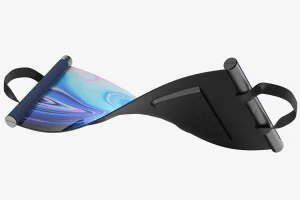
With gadgets like the LG Rollable smartphone being hinted at as a concept, rollable displays are already creating a stir. Although they are still in their infancy, stretchable displays have the potential to create completely new form factors, including expanded panels for immersive gaming or wearables that fit the human body.
Integration of Augmented Reality (AR)
In the development of AR, foldable devices may be essential. A foldable screen could bridge the gap between conventional devices and new AR headsets by acting as both a standard display and an AR interface.
Innovations in Sustainability
Manufacturers are looking into eco-friendly materials and energy-efficient solutions for foldable products as sustainability becomes more and more important. This is in line with industry-wide objectives to lower carbon footprints and electronic waste.
The Significance of Foldable Screens
The emergence of foldable screens signifies a fundamental shift in our understanding of technology, not just an improvement in form factor. These gadgets push the limits of traditional design and provide a preview of a time when hardware will more easily adjust to the demands of people.
As foldable screens advance, they will revolutionise sectors such as healthcare, education, and entertainment that go beyond consumer electronics. Consider foldable displays in medical settings, where clinicians can view comprehensive patient records on portable, flexible panels, or in schools, where students can work together on their experiences.
In conclusion,
Foldable screens are the next big thing in consumer electronics, redefining the digital landscape by fusing creativity, usefulness, and style. Even while there are still obstacles to overcome, the speed at which technology is developing indicates that foldable technology will soon follow in the footsteps of touchscreens and high-definition displays.
For consumers, this portends a future in which our gadgets are more intelligent and flexible enough to fit into our daily routines. The options are as varied as the screens themselves, ranging from cellphones that fold into tablets to rollable TVs and more. The era of foldable technology is here in front of our eyes.