


Implementing a Multi-Layered Security Strategy for Your Business
Cyber dangers are more common and sophisticated than ever in the current digital environment. It is impossible to overestimate the significance of protecting sensitive data, networks, and systems in light of the growing reliance of organisations on digital tools and platforms. A solitary security breach has the potential to cause substantial monetary losses, harm to one’s brand, and erode customer confidence. It is imperative for enterprises to implement a multi-layered security plan in order to effectively counter these attacks.

Using several security measures at various IT infrastructure levels is known as defence in depth, and it is part of a multi-layered security approach. This strategy makes sure that even if one layer is compromised, your assets will still be protected by others. This blog article will examine the essential elements of a multi-layered security plan and offer suggestions for putting it into practice for your company.
Understanding Multi-Layered Security
The foundation of a multi-layered security system is the idea that no security solution is infallible. You can drastically lower the chance of an attack succeeding by putting in place several layers of defence. Every layer acts as a defence against various risks, and when combined, they form a strong security structure that is more challenging for attackers to breach.
The primary layers of a Multi-Layered Security Strategy include:
Perimeter security is the final line of defence, built to protect your network from external threats. This layer includes firewalls, intrusion detection and prevention systems (IDPS), and virtual private networks (VPNs). Firewalls monitor and regulate incoming and outgoing network traffic based on pre-established security rules; however, IDPS can quickly identify and stop malicious activities. VPNs are crucial for safeguarding the security and encryption of data transferred between your internal systems and distant workers, as well as for preventing unauthorised access to your network.

Protecting the internal network from dangers that may have gotten past the perimeter and unauthorised access is the main goal of network security. This layer involves employing tools like VLANs (Virtual Local Area Networks) and subnetting to divide your network into several zones according to security levels. Strong access controls, including network access control (NAC) and multi-factor authentication (MFA), guarantee that only authorised people and devices are able to access particular areas of your network. The efficacy of this layer is further increased by employing encryption protocols like SSL/TLS and doing routine network monitoring.
Endpoint protection: In a world where employees access company data using a variety of devices, such as computers, smartphones, and tablets, endpoint protection is essential. Installing antivirus software, anti-malware programs, and endpoint detection and response (EDR) programs on any device that connects to your network is part of this layer. To safeguard endpoints against the most recent attacks, regular software upgrades and patches are necessary. Putting in place remote wipe and device encryption features can also assist secure data in the event that a device is lost or stolen.
Application Security: An essential component of a multi-layered security plan is safeguarding the applications your company uses. Code reviews, vulnerability assessments, and the implementation of web application firewalls (WAFs) are examples of application security techniques that guard against typical threats like SQL injection and cross-site scripting (XSS). Frequent security testing helps find flaws and fix them before they can be exploited. This includes penetration testing and dynamic application security testing (DAST). Security is integrated throughout the software development lifecycle through the use of secure coding techniques and adherence to development frameworks such as DevSecOps.
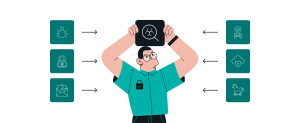
Data Security: Protecting the information that your company gathers, keeps, and uses is the main goal of data security. This layer encrypts data both in transit and at rest, making it difficult for unauthorised parties to access or use the data even if it is intercepted. By putting data loss prevention (DLP) systems in place, sensitive data transfers may be watched over and managed, preventing leaks or illegal access. Ensuring that vital information can be restored in the event of a breach or disaster requires regular data backups and safe storage procedures.
Human Security: Training and teaching staff members about cybersecurity best practices is part of human security, which addresses what is frequently the weakest link in the security chain. Reducing the possibility of human mistake requires regular training sessions on subjects like phishing awareness, password management, and safe browsing practices. Your organization’s overall security posture can be greatly improved by fostering a strong security culture where staff members recognise the value of security and are encouraged to report suspicious activity.
Response to and Recovery from Security Incidents: Having a plan in place for handling security incidents is crucial, even with several levels of protection in place. Predetermined roles and duties, communication methods, and techniques for containing and lessening the effects of an attack should all be part of a successful incident response strategy. By routinely putting your incident response strategy to the test with drills and simulations, you can make sure that your team is equipped to respond to breaches swiftly and efficiently. Furthermore, having a strong disaster recovery strategy in place guarantees that your company can get back up and running as soon as possible following an occurrence.
Implementing a Multi-Layered Security Strategy
To implement a multi-layered security strategy for your business, follow these steps:
Perform a Risk Assessment: To find potential dangers and weaknesses in your IT infrastructure, start by carrying out a thorough risk assessment. Both external risks, like cyberattacks, and internal risks, such insider threats or human mistake, should be taken into account in this assessment. You can prioritise the security measures to employ and where to focus your efforts based on the results of the risk assessment.
Create a Security Framework: Create a security framework outlining the precise layers of defence your company need based on the results of your risk assessment. Guidelines for putting security measures in place and keeping them up to date should be included in this framework, along with rules and procedures for each tier. To guarantee thorough coverage, think about using industry-standard frameworks like ISO/IEC 27001 or the NIST Cybersecurity Framework.

Invest in Security Tools and technology: Put into practice the tools and technology required for security at each tier of your multi-layered approach. Firewalls, antivirus programs, encryption devices, and security information and event management (SIEM) systems are a few examples of this. Make sure these tools are up to date and effective against the most recent threats by regularly evaluating them.
Educate Your Staff: Make sure all staff members receive regular cybersecurity training and are aware of their responsibilities for safeguarding the company. Update training materials frequently to reflect emerging threats and to emphasise the value of adhering to security best practices with examples from everyday life.
Monitor and Review: Keep an eye out for any indications of questionable activity in your IT environment, and make sure your security precautions are still in place by giving them a periodic evaluation. In order to find areas for improvement and to remain ahead of emerging risks, conduct regular audits, vulnerability assessments, and penetration tests.
Create and keep up-to-date an incident response plan that specifies what should be done in the case of a security breach. Make sure the plan is routinely tested to confirm its efficacy and that your team is taught on it.
Conclusion
A multi-layered security plan is necessary to shield your company from the numerous cyberthreats that are present in the world today. You may build a complete security architecture that is more resilient and able to withstand attacks by adding numerous levels of defence to your IT infrastructure. Recall that maintaining cybersecurity involves continuous monitoring, upgrades, and training rather than a one-time effort. You can protect the resources, reputation, and future of your company by adopting a proactive security strategy.