


Free apps are widely available in the current digital era. Every day, millions of users download and depend on these apps, which range from productivity aids to fitness trackers and social media sites. However, have you ever pondered how these apps manage to survive even if they provide their services without charging? Data monetisation is the solution. Even though some apps might not bill you up front, they frequently profit off the collection, analysis, and sale of your data. Essentially, the money that powers their business model is your personal information.
The Illusion of Free
It’s simple to think you’re getting a terrific deal when you download a free program. When you can get something for free, why pay for it? But as they say, “If you’re not paying for the product, you are the product.” Businesses must find a way to make money off of the substantial resources they devote to creating and maintaining apps. Many accomplish this by using your data in different ways.
Background data collection frequently occurs without people being aware of the volume of information being collected. This comprises behavioural information like search history, browsing habits, and app usage trends in addition to personal information like name, age, email, and location. You might unintentionally give applications even more access to your private life by granting them authorisation to use your contacts, camera, or microphone.
How Apps Make Money Off of Your Data
Free apps use a variety of tactics to make money off of your data. Here are a few of the most popular techniques: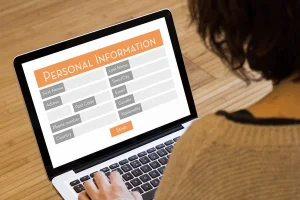
1. Advertising That Is Targeted
Targeted advertising is one of the most profitable ways for free apps to generate revenue. Businesses develop extremely detailed user profiles using data analytics, which are subsequently offered for sale to ads. This raises the likelihood of engagement and conversion by enabling companies to show advertising that are specific to your interests.
For instance, advertisements for gym memberships, exercise supplements, or sportswear may appear if you regularly seek for fitness advice. Because advertisers are willing to pay more for this degree of accuracy, user data is a priceless resource.
2. Data Sales to Outside Parties
Some apps sell user data directly to outside businesses, including data brokers, going beyond targeted advertising. These brokers compile data from many sources to produce thorough customer profiles, which are subsequently offered for sale to financial institutions, insurance providers, and marketers.
Despite being lawful in many places, this technique poses significant privacy issues. Frequently, users have little to no control over who may access their data, how it can be used, or whether it can be shared with others.
3. Freemium business models and in-app purchases
A lot of apps use the freemium business model, which charges for premium features but provides a basic version for free. Even though this method of gathering data is less intrusive, some apps continue to monitor user activity in order to improve their marketing tactics. To find the ideal moment to alert customers to unique content or upgrade offers, they might examine usage trends.
4. Behavioural analytics and surveillance
Some businesses utilise free apps as instruments for behavioural analytics and extensive surveillance. These businesses can forecast political inclinations, emotional states, and even purchase decisions by monitoring user behaviour over time. Advertisers, political campaigns, and those trying to change consumer behaviour will find this information quite useful.
Data Monetization’s Risks
Although free apps are convenient, data monetisa;tion can be expensive. These are a few of the most significant risks:
Invasion of Privacy
Apps that gather a lot of data produce intricate digital footprints that can be used to follow specific people. This degree of monitoring can result in spam, unsolicited ads, and even identity theft if the information ends up in the wrong hands.
Breach of Data
As cybercriminals target businesses that contain a lot of personal data, data breaches are becoming a bigger worry. Your data may be compromised and sold on the dark web if an app has a security breach, leaving you open to fraud and scams.
Deception and False Information
Another major worry is the exploitation of personal information to influence user behaviour. For instance, social media algorithms select content according to user preferences, which frequently reinforces prejudices and promotes the spread of false information. Data-driven political campaigns have occasionally been charged with influencing voter behaviour through microtargeting.

How to Keep Your Information Safe
Although it is practically difficult to completely eliminate data collection, you can take the following precautions to safeguard your privacy:
1. Examine permissions and privacy policies
Spend some time reading an app’s privacy statement before downloading it. Seek out provisions that specify the kind of data that are gathered and their intended use. Pay attention to the permissions you give as well. Consider it a warning sign if an app asks for access to data that doesn’t seem to be relevant to its purpose (for example, a torch app requesting location information).
2. Restrict the Sharing of Data
Users can change their privacy settings in a lot of apps. Whenever feasible, turn off location tracking, limit app permissions, and choose not to have your data collected. Another way to hide your internet activity from trackers is to utilise a virtual private network, or VPN.
3. Make Use of Other Apps
Think about switching to privacy-focused apps instead of well-known ones. For example, messaging apps like Signal provide end-to-end encryption, while search engines like DuckDuckGo do not monitor user activities.
4. Frequently Clear the Cache and App Data
Reducing the quantity of data kept on your device can be achieved by clearing the cache and data of your apps. Reducing tracking can also be achieved by routinely clearing your browsing history and cookies.
5. Use caution when logging into social media
A lot of apps allow users to sign in with their Google or Facebook accounts. This technique can link your data across several platforms, increasing exposure, even though it is convenient. Instead, use email-based logins.
Data Privacy’s Future
Governments and regulatory bodies—particularly in the UK and Europe—are introducing stronger data protection laws in response to growing public concern around privacy. The General Data Protection Regulation (GDPR), a landmark EU and UK law, is designed to give individuals greater control over their personal data. Similar legislation, such as the California Consumer Privacy Act (CCPA) in the US, has followed suit. Despite these regulatory advances, enforcement and compliance remain significant challenges, and individuals must continue to take an active role in safeguarding their own privacy.
In conclusion
Apps that claim to be free really cost your personal information. Users can choose which applications to use and how to secure their information by being aware of how data is gathered and made money. Prioritising digital privacy will continue to be crucial as technology advances to guarantee that people retain control over their personal information. Consider this the next time you download a free app: Is the convenience worth the unstated expense?