


What is Quantum Computing? How Could it Change the Future of Computing?
One of the most innovative areas that has the potential to revolutionise the future in a time when technology is developing at an astounding rate is quantum computing. Quantum computing is a completely new method of information processing, not only an advancement over traditional computing. Imagine resolving issues that would take the most advanced supercomputers millions of years in a matter of seconds. In ways that appeared unthinkable before, quantum computing has the power to transform scientific research, transform industries, and solve puzzles. We’ll examine what quantum computing is, how it operates, and the potentially revolutionary changes it may bring in this post.
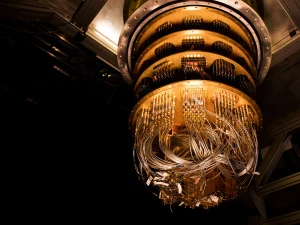
- Quantum computing: what is it?
The field of physics known as quantum mechanics, which examines the behaviour of particles at the atomic and subatomic scales, is the foundation of quantum computing. Bits are the basic unit of information in classical computers, including the most potent supercomputers available today. There are two possible states for a bit: 0 and 1. In contrast, quantum bits, or qubits, are used in quantum computers. Superposition is a quantum property that allows qubits to represent both 0 and 1 at the same time.
In addition to superposition, quantum computing makes use of additional quantum phenomena like interference and entanglement to carry out computations that are not possible with classical systems. Although these ideas provide quantum computers extraordinary power, they also make the technology difficult to create, construct, and maintain.
- Essential Ideas in Quantum Computation
Let’s examine the three key tenets of quantum computing in more detail to comprehend its implications:Superposition
Quantum bits, or qubits, can exist in several states simultaneously thanks to superposition. A qubit can be either a 0 or a 1, or any quantum combination of the two, whereas a classical bit can only be either a 0 or a 1. Quantum computers may execute several calculations at once thanks to this feature. In a quantum computer, superposition allows for the simultaneous testing of every potential solution to a difficult issue.
Entanglement
A quantum phenomenon known as entanglement occurs when two qubits are connected, meaning that regardless of how far away they are, the state of one qubit instantly affects the state of the other. Because changes in one qubit can spread across the system without a direct, step-by-step transfer of information, this special trait allows quantum computers to execute extremely complicated operations more quickly.
Interference of Quantum
In quantum computing, qubit states are controlled and guided towards the right answer to an issue through the use of quantum interference. Interference helps quantum computers identify the most likely solutions to complicated problems by controlling the probability of different qubit states.
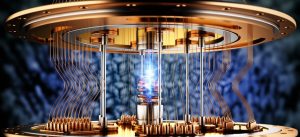
3. The Differences Between Classical and Quantum Computers
Conventional computers work in a linear fashion, processing bits one after the other to complete tasks and resolve issues. For certain kinds of computations, quantum computers can solve problems far more quickly because they can process several possibilities at once by utilising superposition. Because of this capability, quantum computers are particularly well-suited to solving issues in domains where the volume and complexity of data surpasses the capacity of classical systems, such as artificial intelligence, cryptography, and optimisation.
The goal of quantum computing is to improve our processing power in domains where traditional systems fall short, not to replace them. A quantum computer, for instance, might not necessarily make ordinary math or web browsing better, but it could transform fields like communications, and drug discovery.
4. Possible Uses of Cryptography and Security in Quantum Computing
Cryptography is one of the most talked-about uses of quantum computing. Modern encryption techniques depend on intricate mathematical issues that would take millennia for traditional computers to resolve. However, these encryptions might be cracked in a matter of minutes by quantum computers, which presents both a difficulty and an opportunity for cybersecurity. In response, efforts are underway to build nearly impenetrable encryption algorithms using quantum cryptography techniques such as quantum key distribution (QKD). Quantum-resistant cryptography techniques will probably serve as the foundation for cybersecurity in a world where quantum computing predominates.
Healthcare and Drug Discovery
By facilitating quicker and more precise drug discovery, quantum computing has the potential to revolutionise the healthcare industry. Traditional drug research takes years to complete and requires a lot of processing power to mimic molecular interactions. Before going to the laboratory stage, researchers could virtually design and test medications thanks to the remarkable speed at which quantum computers could analyse molecular and chemical interactions. This change has the potential to save lives and speed up the treatment of many illnesses by drastically cutting down on the time and expense of creating new drugs.
Environmental Science and Climate Modelling
Another field that could greatly benefit from quantum computing is climate modelling. Large volumes of data and computing capacity are needed to forecast weather patterns, examine the effects of climate change, and comprehend intricate environmental systems. In order to help scientists make more accurate predictions and create plans for reducing the effects of climate change, quantum computers may be able to execute intricate simulations faster and on a larger scale than traditional computers.
Learning and Artificial Intelligence
By greatly improving machine learning techniques, quantum computing holds the potential to completely transform artificial intelligence (AI). Large datasets might be processed more quickly by quantum systems than by traditional computers, which would speed up AI model training and increase algorithm accuracy. Advances in image recognition, natural language processing, and predictive analytics may result from this progress. AI systems with quantum capabilities may even be able to solve issues that are currently thought to be intractable because of computing constraints.
Financial Optimisation and Modelling
The finance sector deals with intricate issues involving a wide range of factors, such as risk assessments and market movements. Through the simultaneous processing of enormous volumes of financial data, quantum computing can improve risk assessment, portfolio optimisation, and even fraud detection. Financial organisations could have new tools to forecast market behaviour and improve their strategies if quantum algorithms were able to find patterns and connections more quickly and precisely.

- Difficulties with Quantum Computing
Although quantum computing has a lot of potential, a few issues must be resolved before it can be widely used and accessible:Hardware Restrictions
Very specific parameters, such as extremely low temperatures and isolation from outside noise, are necessary for quantum computers to operate. Building scalable and robust quantum systems is difficult under these circumstances. Research on developing a “fault-tolerant” quantum computer—one that can consistently manage errors—is still ongoing.The Quantum Decoherence and Error Rates
Because qubits are extremely sensitive to their surroundings, even minute interference can cause errors; this is referred to as quantum decoherence. For quantum computing to be practical, decoherence must be overcome and error rates must be decreased. Error-correction algorithms are being developed by researchers, but their large-scale implementation is still challenging.
Expense and Availability
A quantum computer is too expensive to build and maintain. Few businesses and academic institutions now possess the resources necessary to develop quantum technology. Even though businesses like IBM, Google, and D-Wave have made great progress, it will probably be years before quantum computers are widely used. True accessibility is still being worked out, although cloud-based quantum computing applications are starting to appear, which could democratise access to some degree.
- How Quantum Computing May Affect Computing in the Future
The promise for quantum computing to transform our approach to problem-solving in a variety of domains arises from its capacity to manage large datasets and intricate computations in ways that classical systems cannot. The fields of healthcare, economics, and environmental science could undergo significant change as we overcome current obstacles and quantum technologies become more reliable. These discoveries may result in innovations we can hardly fathom, opening the door to previously unsolvable problems in science, technology, and medicine.
The Long-Term Goal
Long-term hybrid systems that combine the greatest features of both classical and quantum computing may be produced by integrating the two. In domains like as material research, where quantum systems could replicate atomic structures with previously unheard-of precision, this partnership may lead to new opportunities. Our processing capacity will increase rapidly as we create more effective applications for both quantum and classical computing, ushering in a new era of creativity and exploration.
Lastly,
One of the most fascinating technological frontiers of our time is quantum computing, which holds promise for resolving some of the most challenging issues facing humanity. We are getting closer to a quantum future because to the advancements being made by researchers and IT corporations, even if there are still many obstacles to overcome. Quantum computing has a wide range of potentially revolutionary applications, including cybersecurity, medicine development, climate modelling, artificial intelligence, and finance. Quantum computing is not only the next advancement in computing but also a step into an entirely new world of possibilities as quantum technology develops further and promises to change our planet.